
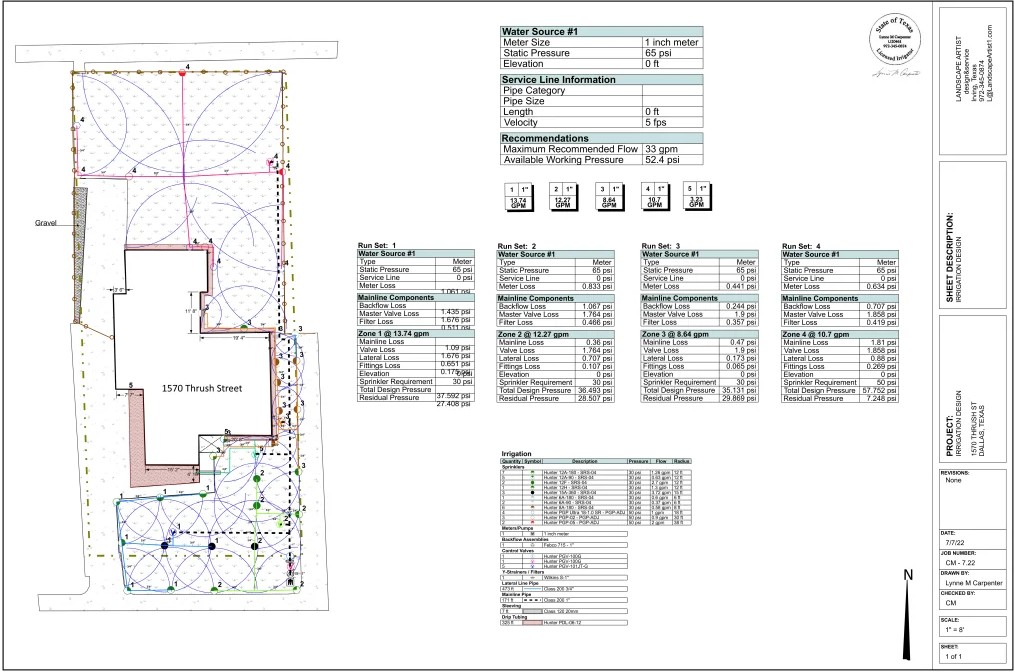
In order to keep landscapes in Wisconsin both green and visually nice throughout the year one has to have a very detailed irrigation plan. The state has a climate characterized by cold winters, wet springs and unpredictable summer showers which makes the management of water very difficult. These climatic conditions require water, saving methods that, at the same time, would let the plants grow vigorously and healthily. If it is not planned well, the landscapes will be the ones to bear the consequences; for example, there could be overwatering, poor drainage, and damage to the plants due to the stress of changing weather conditions in different seasons.
It’s about knowing the soil types, plant requirements and the weather of the area. It is a fact that different parts of a Wisconsin landscape e.g. turf, garden, trees, and hardscapes need watering in different ways. Using the same watering system everywhere is not a good idea in such a situation.
Custom irrigation planning is the key to helping homeowners maintain their beautiful landscapes and investments. It is a multipurpose device that not only reduces the occurrence of plant damage but also water destruction and makes the maintenance be done with less hassle. This article covers the different aspects of landscape irrigation planning, its significance in Wisconsin, how professional systems stand against basic ones, and also gives some tips on how to choose a system that will be performing reliably for a longer time.
Understanding Landscape Irrigation Planning in Wisconsin
Landscape irrigation planning in Wisconsin is mainly about creating systems that work with local environmental conditions. The first step in planning is studying the soil, slope, and drainage characteristics. For instance, clay, heavy or compacted soils, which are quite common in some parts of Wisconsin, need a very cautious water application to prevent water runoff.
Seasonal changes in weather also play an important role here. The spring season usually has enough rain, the summer season may need watering, and the fall preparation and winterization will highly be required to ensure that the systems are protected from freezing. Besides that, planning should be done considering these cycles so that the system can function throughout the year. The choice of plants will also have an effect on the watering system.
Plant selection also affects the irrigation design. Native plants and mature trees get their watering schedules differently compared to turf grass or ornamental flower beds. Zoning systems help to control exactly how water is being distributed. This not only makes the irrigation more efficient but also helps the plants to be healthier.
| Feature | Planned Irrigation | Basic Irrigation |
| Climate Adaptation | Wisconsin-Specific | Generic |
| Water Efficiency | High | Variable |
| Seasonal Management | Built-In | Limited |
| Plant Health Outcomes | Consistent | Inconsistent |
Core Elements of Effective Irrigation Planning
Successful irrigation planning is the combination of design, technology, and environmental awareness which means each element keeps efficient water use and the landscape’s longevity.
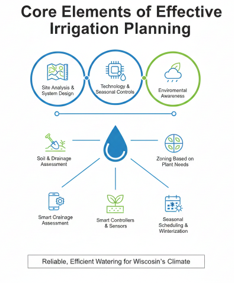
Site Analysis and System Design
Site Analysis and System Design Planning begins with the drafters visually mapping the landscape. Designers examine sun exposure, plant groupings, and elevation changes. This helps them water the roots deeply and avoid wasting water.
Technology and Seasonal Controls
Smart controllers and sensors are the features of modern systems. They help determine the need for watering by checking weather conditions. Also, with seasonal programming, there is less need to make manual adjustments.
Key components of effective irrigation planning include:
- Soil and drainage assessment
- Zoning based on plant needs
- Smart controllers and sensors
- Seasonal scheduling and winterization planning
These components are assembled to provide dependable watering all year round. Expert coordination makes sure that the systems comply with the climate challenges of Wisconsin.
Landscape Irrigation Planning in Wisconsin vs Standard Irrigation Systems
Comparing landscape irrigation planning in Wisconsin with standard systems highlights significant differences. Standard systems often don’t consider local conditions. This can result in overwatering or dry spots.
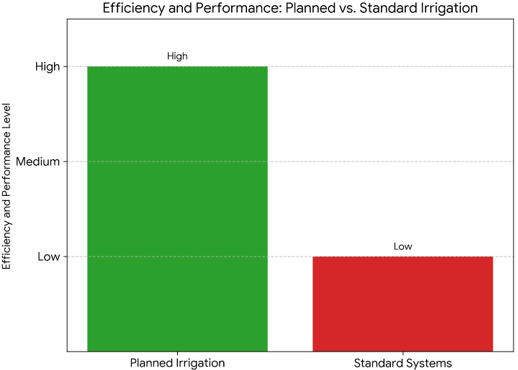
- Outstanding Ability to Tackle Seasons Changes: Designed irrigation systems continually get better results than a regular system by adjusting to the changes in the weather throughout the year.
- Smart System for Weather, Condition: A regular system just sticks to its predetermined, fixed schedule while planned ones take their cues from the real, time changes such as rainfall and temperature.
- Great Water Saving: Living examples of properties in Wisconsin reveal that the plan ones have a much lower water wastage than the traditional setups.
How to Choose the Right Irrigation Planning Approach
Choosing properly the irrigation planning approach depends, initially, on getting a grasp of the needs of the property. The size of the landscape, the types of plants, and the condition of the soil are the things that all count. Clarifications come from the professionals’ evaluations.
It is crucial for the company to have experience with Wisconsin conditions. They have to know about frost lines, winterizing, and local rules. If communication is clear, the systems that are delivered will be those that the customers wanted.
When selecting an irrigation planning service, consider:
- Experience with Wisconsin landscapes
- Knowledge of soil and climate conditions
- Use of efficient technology
- Clear maintenance and seasonal plans
Early planning is the key to better results in the long run. Agreeing on goals and constraints leads to a system tailored to the needs. The proper method guarantees sufficient watering and the plant’s good health.
The Value of Landscape Irrigation Planning in Wisconsin
The Value of Land Scapeartist design Irrigation Planning in Wisconsin Landscape irrigation planning in Wisconsin makes it possible to have nice yards by using clever design and saving water. It considers climate change, soil properties, and the requirements of the plants. Such planning is the passport for landscapes and water resources to remain unscathed.
In comparison with the regular irrigation systems, the planned ones are more efficient and environmental, friendly. They lower wastage and raise plant health. This is a wise decision for property owners to make.
By familiarizing themselves with methods and selecting experienced specialists, property owners are able to make knowledgeable choices. Putting money in a well, thought, out irrigation plan is a good way to ensure that the landscape will do well through the different seasons of Wisconsin.
