
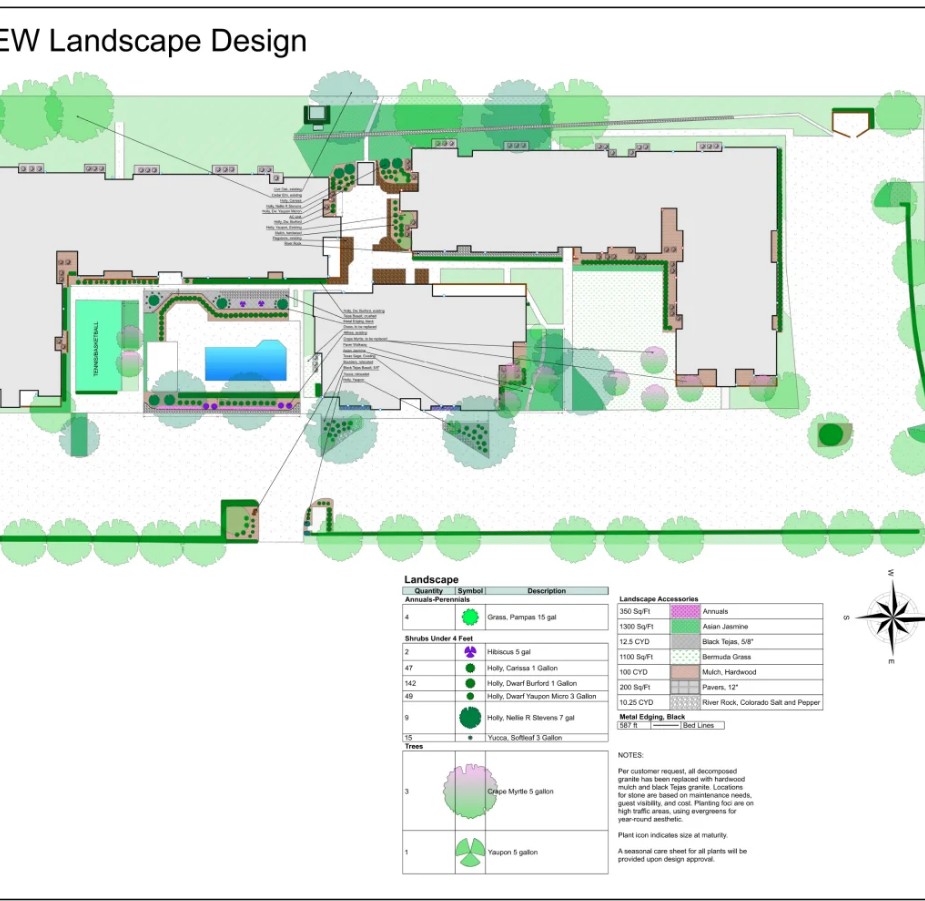
Each property’s Planting Plans Every Property must be thoughtful instead of a random plant choice. They are meant to plan for healthy development, visual uniformity and success of the future. If not planned properly, the landscape gets overcrowded, unlevelled or difficult to maintain.
Every property varies with respect to the type of soil, sunlight and drainage. A professional landscaping plan takes into consideration these when planting trees, shrubs, and flowering plants. They give birth to an ecosystem that is not only balanced, but which also propagates further year after year.
Plants beautify, enhance proportion, and create structure, whether it is a home garden or a commercial landscape setting. This guide describes why planting plans are required, planned design and random planting, and how to achieve lasting success outdoors.
Understanding the Importance of Planting Plans
Improving planting could be possible through analysis. Soil, moisture and climate, which influences plant selection. A landscape planting design that is structured matches plant types with site condition.
Unplanned plants can fight for nutrients and sunlight. Overcrowding results in bad quality growth and higher maintenance cost. If plants are not spaced properly, their roots won’t grow healthily.
Planting strategies enhance visual and physical flows. Designers vary height and colour in their seasonal offerings. The upper layer is made of trees which forms a tree stratum. The lower shrub and ground cover, which are formed by shrubs, form the shrub layer.
| Feature | Random Planting | Professional Planting Plan |
| Soil Compatibility | Inconsistent | Carefully Evaluated |
| Plant Spacing | Overcrowded | Strategically Spaced |
| Seasonal Planning | Minimal | Year-Round Interest |
| Long-Term Maintenance | High | Managed Efficiently |
Planting things on purpose cuts down on waste and makes things look better.
Elements of planting plans suitable for every property
A planting plan is produced with the aid of horticulture and design. Every step commit to sustainability growth.
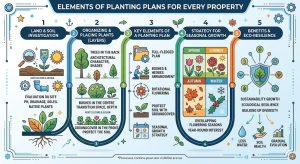
Land and soil investigation
Evaluation of the site sets in motion every successful project. The PH, drainage and sunlight conditions of the soil are examined by the designers.
Every property benefit from a well-crafted planting plan. Native plants generally grow better and require less water.
Organizing and Placing Plants
The use of layers instills depth. The bushes in the centre are growing shorter to fill in the transition space as the trees in the back get taller.
A full-fledged planting plan covers the following key elements.
In order to provide shades along with architectural character
- Bushes and hedges arrangement.
- Rotational Flowering.
- Protect the soil with groundcover.
- Strategy for Seasonal Growth
select species with overlapping flowering seasons to create year-round interest Building up diversity effectually is an ecological resilience strategy.
Contrasting Designs in Cityscape Environment
Enforcement of rules to players shall be through penalties and fines. Although unstructured designs may initially appear beautiful, they quickly feel unbalanced as the plants grow.
Consider The Issue: 2 Houses? A scheme is adopted for planting. The other consists of crops produced in no-spacing, no-long-term planning arrangement. A few years down the line, it is getting overcrowded and quality of plant is deteriorating.
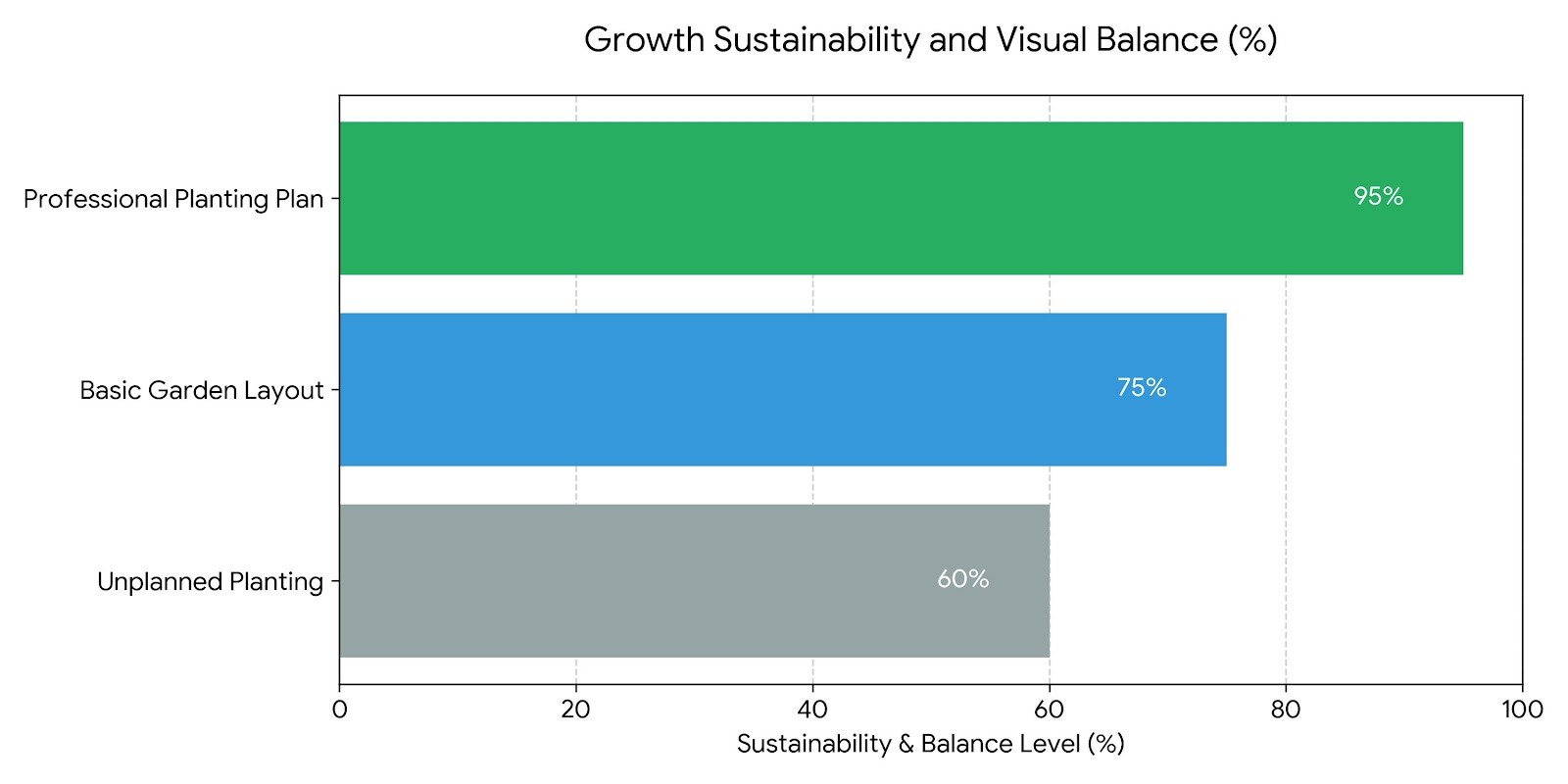
- Our expertly crafted planting schemes exhibit over 95% success rate in terms of sustainability and equilibrium so most probably they ensure healthy experience.
- By strategically laying out similar plants as in garden centers, you can achieve a cost-efficient design and save on maintenance. You will not have spend on replacing your garden plants as often since your plants will not overgrow each other thereby impacting their health.
- A professional structure makes sure the flora retains beauty through all the seasons of the year unlike the random plantation for uniformity.
Effective Planting Plan Writing Tips for Beginners
An effective planting plan can only be created by an expert. We can choose the most suitable plants for the climate through expert advice.
We have listed essential steps to create planting plan
- Assess the climate and soil conditions.
- Identify sun exposure patterns.
- Select native and climate-appropriate species.
- Get ready for a larger size and spacing.
Property owners must communicate clearly with designers. Discuss the preferences and regular maintenance agreeable sensation.
Activities are achieved efficiently by maintenance planning. Your plant’s health can be assisted by frequent pruning and soil amendments. To prevent excessive irrigation, irrigation systems should complement planting schemes.
Carefully Planning Desires Long Success. Good installation methods safeguard roots and allow for health establishment.
There is a need for planting plans for every property
Each property must have a carefully-designed planting plan to ensure sustainability and balance. With proper and careful planning, trees, shrubs and flowers can grow in the surroundings.
When comparing a planned professional landscape with an unplanned plantation, the planned landscape provides better growth, less maintenance, and year-round beauty. Land Scapeartist Design uses soil tests, proper spacing, and crop rotation strategies to improve performance and ensure healthier plant development.
Planting design adds value in land use & property value. Through thoughtful planning and maintenance over time, landscapes will flourish.
Smartly planting in your outdoor space will create a living eco-system. Owners of real estate who invest in strategic planning are rewarded with landscapes that will yield for years.
